How Unifying Acquisition and Retention Journeys Brings GTM Teams Onto One Page
As SaaS businesses scale, growth becomes less about isolated wins and more about coordination. What once worked as separate tools for marketing attribution, product analytics, sales pipelines, and customer success now creates blind spots instead of clarity.
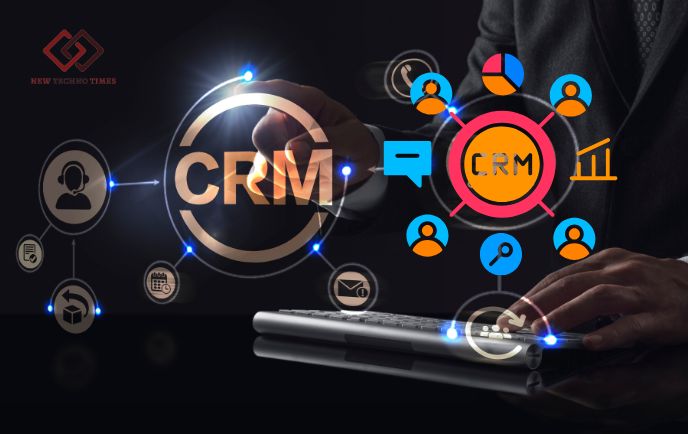
In response, a new approach is emerging: Full-Journey CRM.
Instead of managing acquisition, onboarding, and retention in silos, modern SaaS teams are beginning to map and measure the entire customer lifecycle as one continuous journey.
This shift is changing how go-to-market (GTM) teams operate and how growth decisions are made.
The Problem with Fragmented Growth Systems
Most SaaS organizations still rely on a patchwork of tools:
- Marketing platforms track campaigns and clicks
- CRMs manage deals and accounts
- Product analytics measure feature usage
- Customer success tools monitor renewals and churn
Individually, these systems work. Collectively, they fail to answer a simple question:
How do customers actually move from first touch to long-term value?
The result is misalignment across teams and missed opportunities:
- Marketing teams optimize for leads, not lifetime value
- Sales teams lack visibility into pre-sales engagement
- Customer success teams discover churn risk too late
- Product teams struggle to link usage patterns to revenue outcomes
When each function sees only part of the journey, growth becomes reactive instead of predictable.
Also Read: Increase your Company’s productivity with CRM integration
Why SaaS Growth Now Requires a Full-Journey View
Modern customer journeys are:
- Multi-touch
- Multi-stakeholder
- Cross-channel
- Non-linear
A prospect may interact with ads, content, sales, product trials, and support before becoming a customer and continue engaging long after conversion.
A full-journey CRM approach connects these interactions into a single timeline, allowing teams to understand:
- How acquisition quality impacts retention
- Which early behaviors predict long-term success
- Where friction appears before churn
- When accounts are ready for expansion
Instead of tracking isolated metrics, teams gain context.
Acquisition and Retention Are No Longer Separate Motions
Traditionally, acquisition and retention have been treated as different phases, owned by different teams with different KPIs.
That separation no longer holds.
What happens during acquisition channel, messaging, expectations set—directly influences:
- Time to value
- Product adoption
- Renewal likelihood
Likewise, retention signals often appear far earlier than renewal dates:
- Declining engagement
- Reduced feature depth
- Changes in usage patterns across accounts
A full-journey approach connects these signals, helping teams act before revenue is at risk.
Also Read: How to Choose the Best CRM Software for Your Organization?
What a Full-Journey CRM Enables in Practice
End-to-End Customer Timelines
Every meaningful interaction from first visit to renewal exists in one continuous view. Teams no longer need to reconstruct journeys across tools or spreadsheets.
Faster, More Accurate Attribution
Instead of last-click or channel-only attribution, growth teams can see how multiple touchpoints contribute to real conversions and long-term value.
Proactive Retention and Expansion
By combining engagement, product usage, and revenue signals, teams can identify churn risk and expansion opportunities weeks earlier than traditional methods.
Shared Visibility Across GTM Teams
Marketing, Sales, Product, and Customer Success work from the same data, reducing handoff friction and conflicting interpretations.
The Business Impact of Unified Journeys
Organizations adopting a full-journey model consistently report:
- Faster lead-to-account conversion due to better context
- Higher retention rates through earlier intervention
- Improved expansion forecasting based on real usage signals
- More realistic growth planning grounded in lifecycle data
Most importantly, teams stop debating numbers and start acting on insights.
Why This Shift Is Happening Now
Several forces are accelerating the move toward full-journey CRM:
- Longer sales cycles and higher CAC
- Greater pressure on retention and net revenue expansion
- Increased accountability across GTM functions
- The rise of RevOps and lifecycle-based growth models
In this environment, partial visibility is no longer enough.
Also Read: Implementing Salesforce (CPQ) to Revenue Cloud Advanced – Tackling Deployment Challenges
The Future of SaaS Growth Is Lifecycle-Driven
Growth in modern SaaS isn’t owned by one team or one tool. It’s the result of how well organizations understand and manage the entire customer journey from first signal of intent to long-term partnership.
Full-journey CRM represents a shift away from activity tracking toward outcome-driven growth intelligence.
For SaaS leaders, the question is no longer whether to adopt this approach but how quickly they can move beyond fragmented systems and start operating from a shared, lifecycle-wide view.

We, at New Techno Times aim to provide the best technology information to readers to gain knowledge of what is going on in the world around us. For related blogs about cybersecurity and technology, Digital Marketing, Business, Education keep following us.